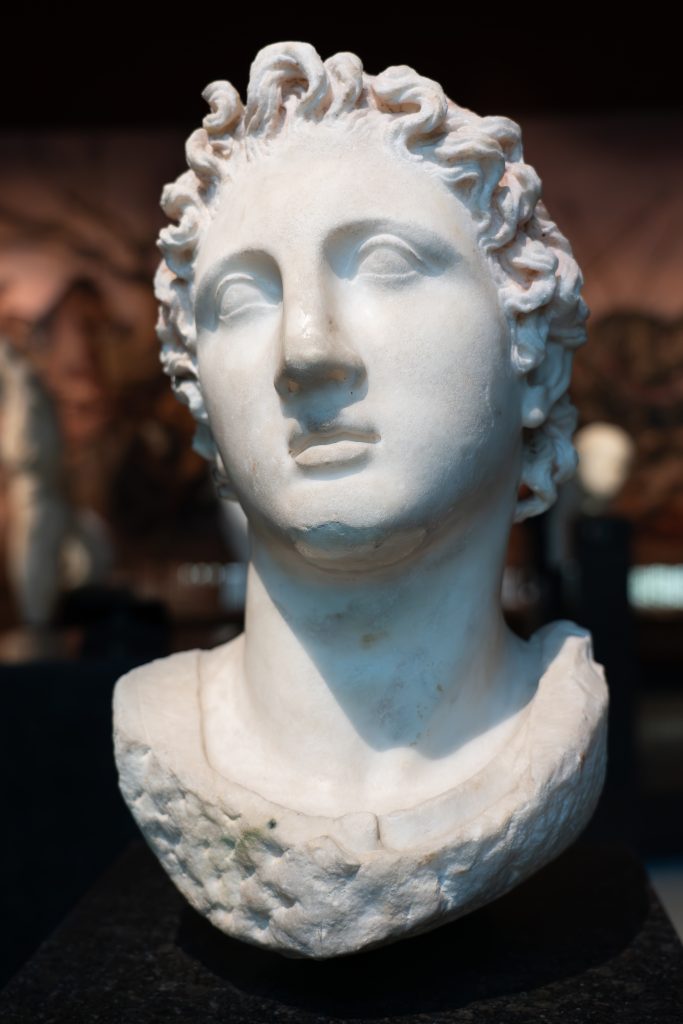
Alexander
Let us start at the beginning. How many world powers came before Greece, and how long did each one last? Historians count Egypt as the first world power to rule over this part of the world.
1. Egypt: 1570 to 1070 BC, about 500 years
2. Assyria: 911 to 609 BC, about 302 years
3. Babylon: 612 to 539 BC, about 73 years, counting from the fall of Nineveh
4. Medo-Persia: 539 to 331 BC, about 208 years
5. Greece: 336 to 30 BC, about 306 years
These are the dates historians give. Read the sources below and check them for yourself.
12 Steps to a World Power
1. 336 BC: Philip is killed, and Alexander becomes king at 20.
2. 335 BC: A revolt breaks out in Greece, and Alexander destroys Thebes as a warning.
3. 334 BC: He crosses into Asia and wins at the Granicus.
4. 333 BC: King Darius of Persia is defeated at Issus.
5. 332 BC: He takes the island city of Tyre after a seven-month siege.
6. 332 to 331 BC: Egypt surrenders without a fight, and he founds Alexandria.
7. 331 BC: He wins the decisive Battle of Gaugamela.
8. 330 BC: Persepolis burns, and Darius is killed by one of his own governors.
9. 329 to 327 BC: He conquers Bactria and Sogdiana in Central Asia.
10. 326 BC: He defeats King Porus in India at the Hydaspes.
11. 326 BC: His tired army refuses to go farther, and he turns back.
12. 323 BC: He dies in Babylon at 32.
Where It All Began
Have you ever wondered how the Grecian world power began? Not with an army or a map. It began with a child, born in a place most people at that time did not think much about. This is the story of the boy from Pella, Alexander, before he was ‘the Great’. His father, Philip II, ruled a small kingdom at the northern edge of the Greek world. His mother, Olympias, came from Epirus and claimed to be descended from Achilles.
A world power came from this leader, and it all started here. In this blog post, you will see what his father built, follow the conquests, and find out what happened after he died at 32. You will also discover a second Pella and learn where to check every claim for yourself.
Pella was the capital of ancient Macedonia, roughly 24 miles northwest of Thessaloniki. Alexander was born there in July of 356 BC. The excavated houses of Pella had mosaic floors made of tiny pebbles, including a lion hunt scene. Today, visitors can see the site and its museum.
One story from his boyhood shows how he thought. A wild horse named Bucephalus threw every rider who tried to mount him. Young Alexander noticed that the horse was afraid of its own shadow. He turned it to face the sun, and the horse calmed down. His father was so proud that he reportedly said Macedonia was too small for such a son.
According to the Greek writer Plutarch, his father was so proud that he said Macedonia was too small for such a son.
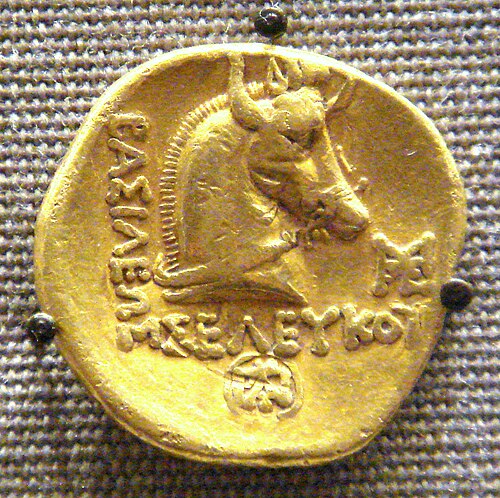
A Boyhood in Pella
Then came school. At about age 13, around 343 B.C.E., Alexander began lessons with the philosopher Aristotle near the town of Mieza.
If you read Blog 17, you already met that teacher. Aristotle is said to have given Alexander an annotated copy of the Iliad, and Alexander carried it on his campaigns.That was the boy from Pella at 13, already learning from one of history’s greatest minds.
See what his father, Philip II, built before him
But the boy from Pella did not come from nowhere. His father had been busy. Philip inherited a kingdom on the verge of collapse, then turned its army into a disciplined force. His foot soldiers carried a pike about twenty feet long, called the Sarissa. Philip reformed the cavalry too.
Alexander showed his own ability early. In 340 BC, at only 16, he ruled Macedonia as regent while Philip besieged the city of Byzantium.
Two years later, in August of 338 BC, that new army beat Athens and Thebes at the Battle of Chaeronea. Alexander was 18 years old, and he led the cavalry. Afterward, Philip formed the League of Corinth, an alliance of Greek states. Then he planned a war against Persia, the same empire we met in Blog 18.
However, Philip never made it. In fact, in 336 BC, his own bodyguard, Pausanias, killed him at his daughter’s wedding feast. Some rumors blamed the Persian king. Others blamed Alexander’s mother. Nobody knows for sure. Either way, Alexander became king at 20.
Follow the conquests from Persia to India
Alexander wasted no time. In 335 BC, he crushed a revolt in Greece and destroyed the city of Thebes as a warning to the other city-states.
In 334 BC, by 21, the boy from Pella had already crossed into Asia with about 37,000 troops and won at the Granicus River. He nearly died in a cavalry duel during that fight. The next year, in 333 BC, he defeated King Darius of Persia at Issus.
Next came the siege of Tyre in 332 BC. It lasted seven months, and many consider it his greatest military achievement. From there, Egypt surrendered without a fight, and around 331 BC he founded the city of Alexandria.
On October 1, 331 BC, at the age of 25, he broke the main Persian army at Gaugamela, and King Darius fled. In 330 BC, Persepolis burned. One account says it was revenge for the burning of the Acropolis in Athens 150 years earlier. That links straight back to the Persians who burned Athens in Blog 18. Later that year, one of Darius’s own governors, Bessus, killed him. From 329 to 327 BC, Alexander pushed on into Bactria and Sogdiana in Central Asia.
The March into India
Then he marched to India. In 326 BC, at 29, he fought King Porus and his war elephants at the Hydaspes River. He crossed the river in pouring rain to attack, and he won. Then he spared Porus and let him keep ruling.
Soon after the battle, his beloved horse Bucephalus died. Some ancient writers say from wounds, and others say from old age. Alexander was so grieved that he founded a new city on the bank of the Hydaspes and named it Bucephala, in memory of his horse.
But his army had reached its limit. At the Hyphasis River, his tired soldiers refused to march any farther east. Historians still debate whether to call it a mutiny. Whatever the word, Alexander turned back.
Find out what happened after he died at 32
In June of 323 BC, Alexander died in Babylon at the age of 32. A fever gripped him for about ten days. What killed him? Nobody knows for sure, and people have suggested many causes. Here are five of the leading theories:
– **Malaria.** This is the traditional suspect, since Babylon sat near marshland. Critics say the mosquitoes that carry malaria do not thrive in the dry lands of central Iraq.
– **Typhoid fever.** This illness spreads through contaminated food or water. Critics point out that no record shows a typhoid outbreak in Babylon at that time.
– **Poison.** Rumors of poison spread right away. In 2014, toxicologists Leo Schep and Pat Wheatley suggested wine made from the white hellebore plant. The ancient writer Plutarch noted that most writers thought the poison story was made up.
– **Necrotising pancreatitis.** Dr. Thomas Gerasimides, an emeritus professor of medicine at Aristotle University of Thessaloniki, proposed this cause. Alexander fell ill after a heavy round of drinking.
– **Guillain-Barré syndrome.** In 2018, Dr. Katherine Hall of the University of Otago proposed this rare condition, in which the body’s immune system attacks the nerves and causes paralysis. It could explain why Plutarch says his body showed no decay for six days. It also means he may have been alive when he was declared dead.
Alexander had ruled for only 13 years. In that short time, the boy from Pella had conquered most of the known world. When his generals asked who should inherit the empire, the historian Diodorus reports that Alexander answered, “to the strongest.” Historians debate whether he really said it.
The Empire Divided
Either way, the empire fell apart. His generals fought each other for about 40 years. After the Battle of Ipsus in 301 BC, the empire was divided among his four top generals:
– Cassander took Macedonia and most of Greece.
– Lysimachus took much of present day Turkey.
– Seleucus took Iran, Iraq, Syria, and parts of Central Asia.
– Ptolemy took Egypt.
In time, three lasting kingdoms remained: Ptolemaic Egypt, the Seleucid Empire, and Antigonid Macedon.
Bible readers may recall Daniel chapter 8, which speaks of a Greek king and four kingdoms that followed him. Open any Bible and read it for yourself.
The empire did not last as one kingdom, but Greek culture spread across all of it. Greek became the common language of the region. That is one reason the Christian Greek Scriptures were written in Greek. We will see that Greek world again in our next blog post, when Paul steps into Athens.
Discover a second Pella, and its link to first century Christians
The boy from Pella died in Babylon, but the world he built did not vanish with him. Greek settlers followed in his wake and carried his birthplace with them. In the Jordan Valley, they gave a city the name Pella, most likely to honor where he was born. The sources are not sure exactly when.
Centuries later, that second Pella became a place of safety. Jesus had warned his disciples that when they saw Jerusalem surrounded by armies, they should flee. Here are his words:
“When you see Jerusalem surrounded by armies, then know that its desolation is at hand. Then let those who are in Judea flee to the mountains. Let those who are in the middle of her depart. Let those who are in the surrounding countryside not enter into her. For these are days of vengeance, that all things which are written may be fulfilled. But woe to those who are pregnant and to those who nurse infants in those days! For there will be great distress in the land, and wrath to this people. They will fall by the edge of the sword, and will be led captive into all the nations. Jerusalem will be trampled down by the Gentiles, until the times of the Gentiles are fulfilled.” Luke 21:20-24, World English Bible
Matthew’s Gospel records this same warning: “When, therefore, you see the abomination of desolation, which was spoken of through Daniel the prophet, standing in the holy place (let the reader understand), then let those who are in Judea flee to the mountains.” Matthew 24:15-16, World English Bible
The Roman Withdrawal
That autumn, in 66 C.E., the Jews of Judea were in revolt against Rome. The Roman governor of Syria, Cestius Gallus, marched on Jerusalem. His army reached the city and pushed into the suburbs. Then, for reasons that remain unclear, he pulled back. The historian Josephus, who witnessed the war, believed Cestius would have taken the city with a little more time.
Josephus adds that many prominent citizens then left Jerusalem, like passengers abandoning a ship about to sink. He does not mention the Christians, but his account shows that the way out was open.
The Christians who saw the Roman army leave took Jesus’ warning seriously. They began leaving Jerusalem. The fourth century church historian Eusebius wrote that a revelation told the church in Jerusalem to move to Pella before the war. The later writer Epiphanius records the same tradition.
Not every historian agrees this happened exactly as described, but archaeologists have long searched Pella itself for evidence of it, and the nineteenth century historian Philip Schaff wrote plainly that “the Christians of Jerusalem, remembering the Lord’s admonition, forsook the doomed city in good time and fled to the town of Pella.”
Why They Chose Pella
Why Pella? It sat across the Jordan River, in the region called the Decapolis, away from the fighting in Judea. That made it one of the safer places within reach of Jerusalem.
Within a few years, the Romans returned. Titus surrounded Jerusalem near Passover in 70 C.E., trapping residents and pilgrims alike. Josephus reported that more than a million people died, though many historians think his numbers are too high. The Christians who had listened were already safe across the Jordan.
I have never stood in either Pella, but the second one stays with me. For the early Christians who reached it, Pella meant life. They took the warning seriously, and their lives were spared.
The sources are listed below
You met the boy from Pella and followed him into becoming Alexander the Great. His father’s army and alliances made it possible. You followed the conquests from Persia to India, and learned what happened after he died at 32. A second Pella waited at the end.
A world power came from a boy born in Pella. And a city that borrowed the name of his birthplace gave shelter to people who took the warning seriously.
Read for yourself references:
On the flight to Pella:
– Wikipedia, “Flight to Pella,” a neutral overview of the tradition and the scholarly debate over it
– Philip Schaff, History of the Christian Church, Volume 1, section 39, on the Christian Classics Ethereal Library
– Stephen Bourke, “The Christian Flight to Pella: True or Tale?” Biblical Archaeology Review, May/June 2013
– Craig Koester, “The Origin and Significance of the Flight to Pella Tradition,” Catholic Biblical Quarterly 51 (1989): 90-106, the key scholarly paper on the debate.
– Josephus, The Jewish War, Whiston translation. Book 2, chapter 19, sections 1 to 9 tell of Cestius Gallus’s march on Jerusalem, his siege, and his retreat. Book 2, chapter 20, section 1 tells of the prominent citizens who left the city afterward.
– Eusebius, Church History, Book 3, chapter 5, section 3, for the flight to Pella. Free here
– Luke 21:20-24 and Matthew 24:15-16 in the World English Bible, a free, public domain translation.
On Alexander:
– Arrian, Anabasis of Alexander, the most complete account of the campaigns. Free on Project Gutenberg
– Plutarch, Life of Alexander, Chapter 61 tells of Bucephalus and the city of Bucephala.
– Britannica, Pella
– Britannica, “How Did Alexander the Great Really Die?“
– The Collector, “How Did Alexander the Great Die?“
– History News Network, on the white hellebore theory
– The Greek News Agenda, on the pancreatitis theory
On the dates of the world powers:
– World History Encyclopedia, New Kingdom of Egypt
– World History Encyclopedia, Neo-Assyrian Empire timeline
– Livius, Battle of Ipsus
– World History Encyclopedia, Hyphasis Mutiny
Do not take my word for it. I encourage you, to open the accounts and read for yourself.
Greek Words for This Journey
| English | Greek | Sounds Like |
|---|---|---|
| King | Βασιλιάς | va-see-LYAS |
| Kingdom | Βασίλειο | va-SEE-lee-o |
| Horse | Άλογο | A-lo-go |
| Army | Στρατός | stra-TOS |
| Battle | Μάχη | MA-hee |
| Alexander the Great | Μέγας Αλέξανδρος | ME-gas a-LEK-san-dros |
| Pella | Πέλλα | PEL-la |
Get your FREE Greek Phrase Guide eBook.
Practical Greek Phrases for travelers who want to speak the language.
Enter your email address to receive your free eBook.
Follow us on TikTok, Threads and Instagram @speakgreek.app for daily tips!
Leave a Reply