The Man Struck Blind on the Road to Damascus
After Stephen, a follower of Jesus, is killed, this man takes the lead in hunting down Jesus’ followers. He goes into one house after another, drags men and women out, and throws them into prison.
Many of the disciples flee to other cities and begin to declare the good news there. This Pharisee, a strict religious teacher, is not happy about that. So he gets letters from the high priest. Those letters give him the power to arrest anyone who follows Jesus and bring them back to Jerusalem in chains.
What is his name? Who is this man?
His name is Saul.
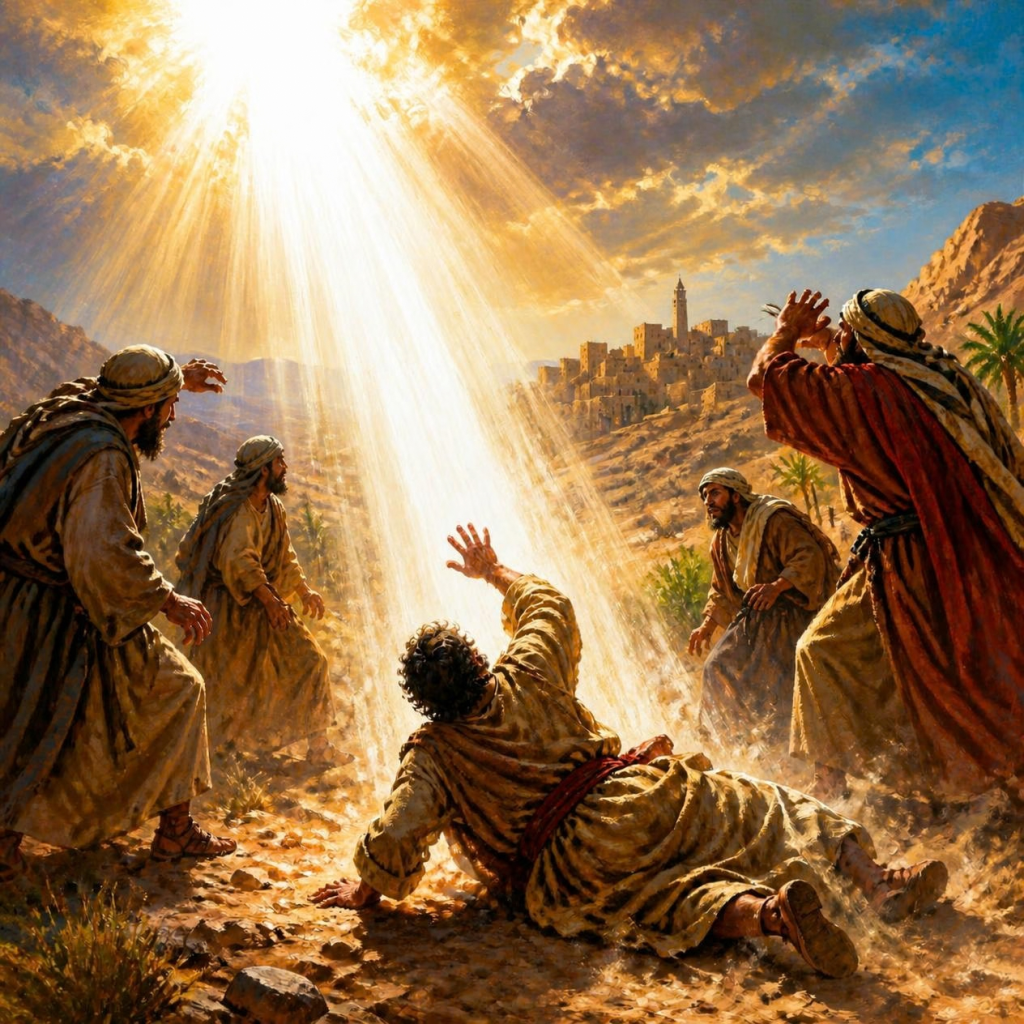
He is now on his way to Damascus with his letters to round up more disciples of Jesus. Suddenly a light from the sky flashes around him, and Saul falls to the ground.
A voice speaks: “Saul, Saul, why do you persecute me?”
Saul answers with a question of his own: “Who are you, Lord?”
“I am Jesus, whom you are persecuting.”
Saul gets up from the ground. His eyes are open, but he cannot see. The men with him heard the voice, but they saw no one. They take him by the hand and lead him into Damascus.
For three days, Saul sits in the dark. He does not eat, and he does not drink. (Adapted from Acts 9:1 to 9, World English Bible)
How did a man so certain end up blind and helpless on that road? This is the story of how a man went from Saul to Paul. In this blog post, you will meet the boy from Tarsus, the student in Jerusalem, and the man who watched Stephen die. You will also see what happened when his sight returned, and you will find where to read every part for yourself.
To answer that question, let us go back to the beginning. Shall we?
Saul of Tarsus
Long before the road, there was a city Saul was born in. Tarsus. A busy port city in Cilicia, in what is now southern Turkey. He later described it as no small city (Acts 21:39).
Tarsus was a Greek speaking city of schools and learning. Ancient writers praised its teachers, and some ranked its schools alongside those of Athens and Alexandria.
Does that city sound familiar? If you read Blog 19, it should. In 333 BC, Alexander the Great passed through Tarsus. He swam in the icy Cydnus River, fell gravely ill, and nearly died. More than three centuries later, a boy named Saul grew up near that same river.
The Greek world Alexander left behind was the world Saul knew. Greek was the common language, and Greek ideas filled the streets.
Yet Saul was not only a city boy from a Greek town. His family was Jewish, and he later called himself a Hebrew of Hebrews from the tribe of Benjamin (Philippians 3:5). He may have been named after Israel’s first king, who came from that same tribe. On top of that, he was born a Roman citizen (Acts 22:28). In one man, three worlds met: Hebrew, Greek, and Roman.
A Student in Jerusalem
Tarsus was his birthplace, but Jerusalem shaped him. Saul grew up there and studied under Gamaliel, a respected teacher of the law (Acts 22:3). Gamaliel was a Pharisee, and the people honored him (Acts 5:34).
Saul learned fast. He became a Pharisee himself and burned with zeal for the traditions of his fathers (Philippians 3:5 to 6). In other words, he did not just study his faith. He defended it with everything he had.
That zeal, however, took a very dark turn. When a new group of people began following Jesus, Saul saw them as a danger. So he set out to stop them. To see how far it went, we first need to meet the man whose death changed everything.
Who Was Stephen?
Stephen was a follower of Jesus, also called a disciple. He was known for his faith and his wisdom.
Some men argued with him, but they could not win. As a result, they stirred up the people and brought in false witnesses, who said he spoke against the temple and the law.
Stephen was seized and taken before the Sanhedrin, the highest court of the Jewish people (Acts 6:8 to 14).
As he stood there, everyone sitting in the council looked at him and saw that his face looked like the face of an angel (Acts 6:15).
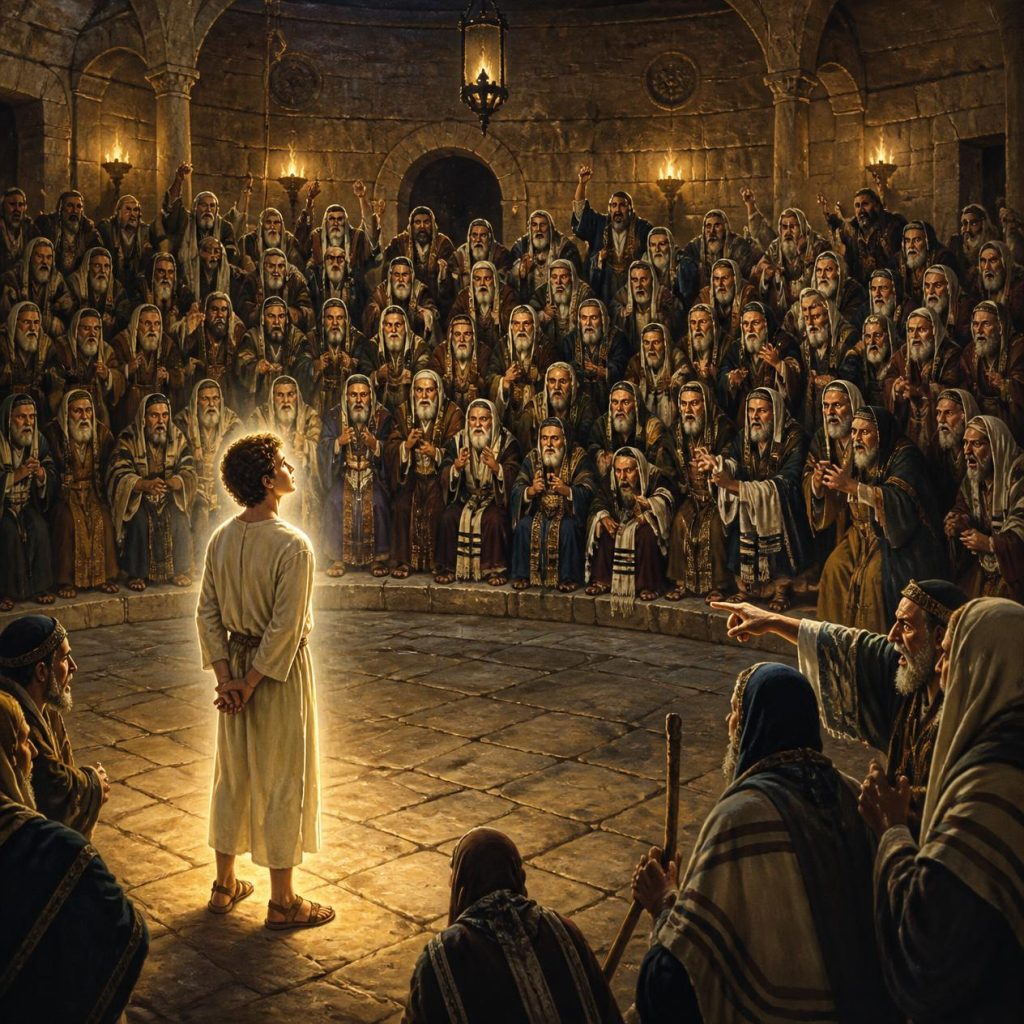
According to Jewish tradition, the Sanhedrin was made up of 71 men.
That count is 70 members plus the high priest, who led the court.
The book of Acts does not give a number, so this comes from Jewish writings outside the Bible.
The high priest asked Stephen one question: “Are these things so?” (Acts 7:1).
Stephen answered with a long speech that retold Israel’s history (Acts 7:2 to 53). He spoke of Abraham, Joseph, and Moses.
His point was that God’s people had often turned against the ones God sent to save them.
Joseph’s brothers sold him. Israel pushed Moses aside. Stephen also said that God does not live in buildings made by human hands.
Then he told the council plainly that they were doing the same thing their fathers had done (Acts 7:51 to 53). That is when the council grew furious.
Saul Watched Stephen Die
One event marks the turning point.
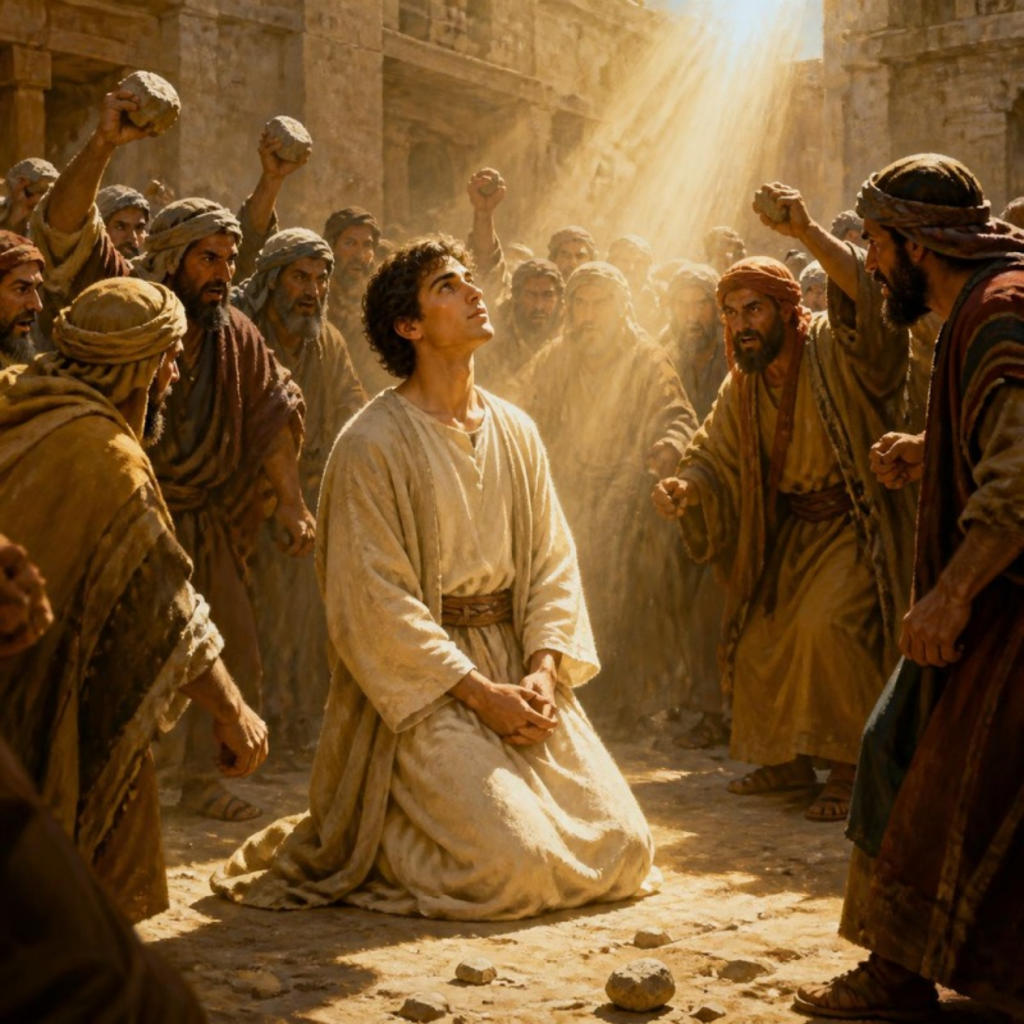
Stephen was dragged out of Jerusalem and stoned to death.
The men who threw the stones laid their coats at the feet of a young man named Saul (Acts 7:58).
Even as the stones struck him, Stephen prayed for the men who were killing him (Acts 7:59 to 60).
Saul was there, and he approved (Acts 8:1).
Ananias and the Return of Sight
Meanwhile, in Damascus, a follower of Jesus named Ananias received a message. He was to go to a house on Straight Street and ask for Saul of Tarsus (Acts 9:11).
Ananias was afraid. He had heard how much harm Saul had done to believers. However, he was told that Saul was a chosen man, and so he went (Acts 9:13 to 15).
Picture that walk. Ananias is about to meet the man who came to arrest people like him.
He laid his hands on Saul and said, “Brother Saul, the Lord, who appeared to you on the road by which you came, has sent me, that you may receive your sight, and be filled with the Holy Spirit.” Right away, something like scales fell from Saul’s eyes, and he could see (Acts 9:17 to 18).
Notice the very first word Saul heard from a believer: “Brother.”
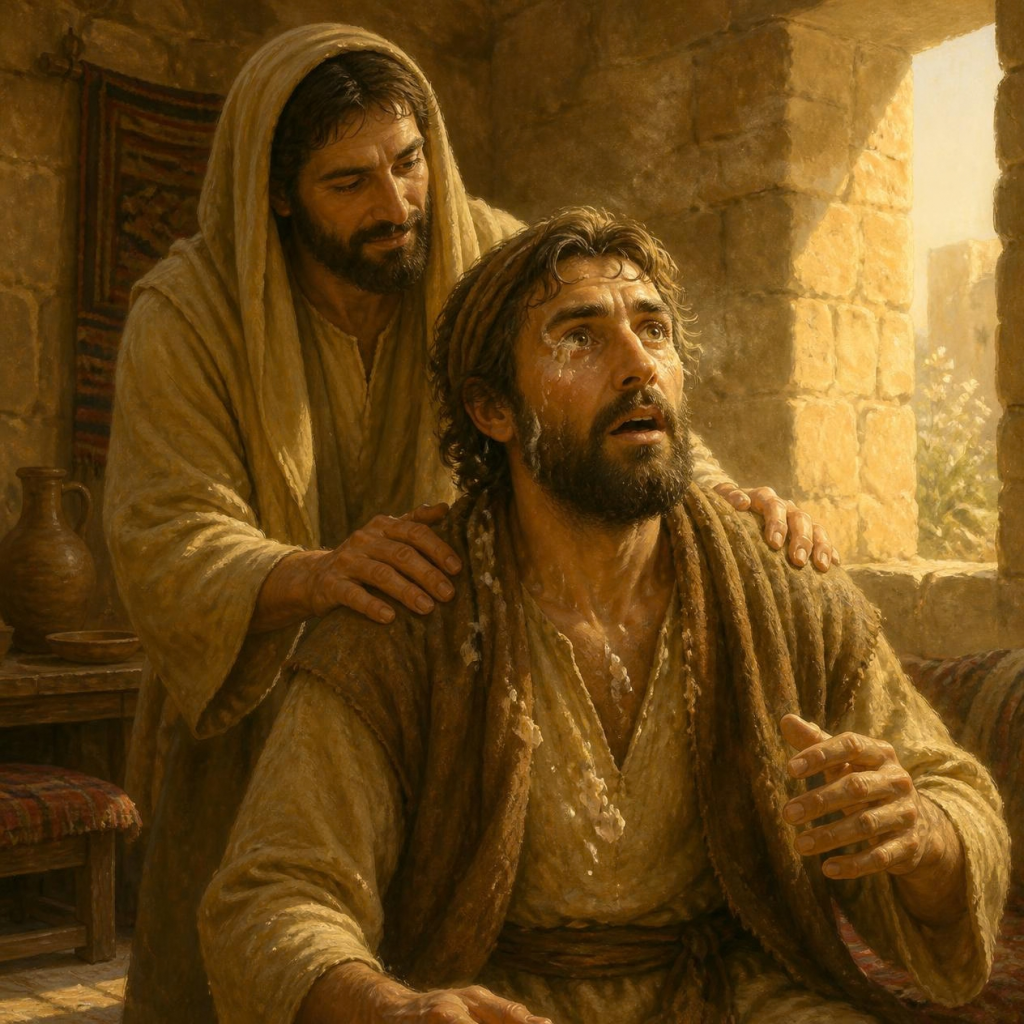
Saul was then baptized, ate, and regained his strength. After several days with the disciples in Damascus, he began to preach in the synagogues that Jesus is the Son of God (Acts 9:18 to 20). The hunter had become a follower.
Was the Change From Saul to Paul Really a New Name?
Here is a detail many readers miss. The Bible never says his name changed on the road to Damascus.
Acts first calls him “Saul, who is also called Paul” while he is on the island of Cyprus (Acts 13:9). From that point on, Luke, the traditional writer of Acts, simply calls him Paul.
Saul was his Hebrew name. Paul comes from the Latin name Paulus. Many scholars think he carried both names from childhood, since he was a Jew and a Roman citizen.
So the real change from Saul to Paul was not a new name. It was a new purpose. The man who once chased believers now traveled the Greek and Roman world to tell people about Jesus.
From Hating Men and Women to a God Fearing, Peaceable Man
Look at the whole journey. Saul once persecuted followers of Jesus all the way to the death. Later he said it himself, that he was “binding and delivering into prisons both men and women” (Acts 22:4). He was full of hatred toward them.
Yet he ended as a God fearing, peaceable man. Years later, he wrote, “If it is possible, as much as it is up to you, be at peace with all men” (Romans 12:18).
That is the full journey from Saul to Paul.
Discover Where the Sources Are, So You Can Read for Yourself
You stood on the road to Damascus and saw a man struck blind. Then you went back to Tarsus, the city Alexander once visited. From there, you followed Saul to Jerusalem, to Stephen and the Sanhedrin, and to the road again. At the end, you saw that the change from Saul to Paul was about purpose, not just a name. You also watched him go from hatred to peace.
His story does not end in Damascus. Years later, he would walk into Athens, the city of Socrates and Plato from Blog 17. In a coming blog post, we will follow him there.
Read for yourself references:
On Saul and Paul:
Wikipedia, “Paul the Apostle”: https://en.wikipedia.org/wiki/Paul_the_Apostle
Britannica, “Saint Paul the Apostle”: https://www.britannica.com/biography/Saint-Paul-the-Apostle
On the Sanhedrin:
Britannica, “Sanhedrin”: https://www.britannica.com/topic/Sanhedrin
Mishnah, Sanhedrin 1:6, for the tradition of 71 judges. Free on Sefaria.
On Tarsus and Alexander:
World History Encyclopedia, “Tarsus”: https://www.worldhistory.org/Tarsus
1911 Encyclopaedia Britannica, “Tarsus,” on Wikisource: https://en.wikisource.org/wiki/1911_Encyclop%C3%A6dia_Britannica/Tarsus
Arrian, Anabasis of Alexander, Book 2, on Alexander’s illness at Tarsus. Free on Project Gutenberg: https://www.gutenberg.org/ebooks/46976
Don’t just take my word for it, I encourage you to open the accounts and read for yourself.
Greek Words for This Journey
| English | Greek | Sounds Like |
| Light | Φως | fos |
| Voice | Φωνή | fo-NEE |
| Blind | Τυφλός | tee-FLOS |
| Brother | Αδελφός | a-thel-FOS |
| Teacher | Δάσκαλος | THA-ska-los |
| Road | Δρόμος | THRO-mos |
Get your FREE Greek Phrase Guide eBook.
Practical Greek Phrases for travelers who want to speak the language.
Enter your email address to receive your free eBook.
Follow us on TikTok, Threads and Instagram @speakgreek.app for daily tips!
Leave a Reply