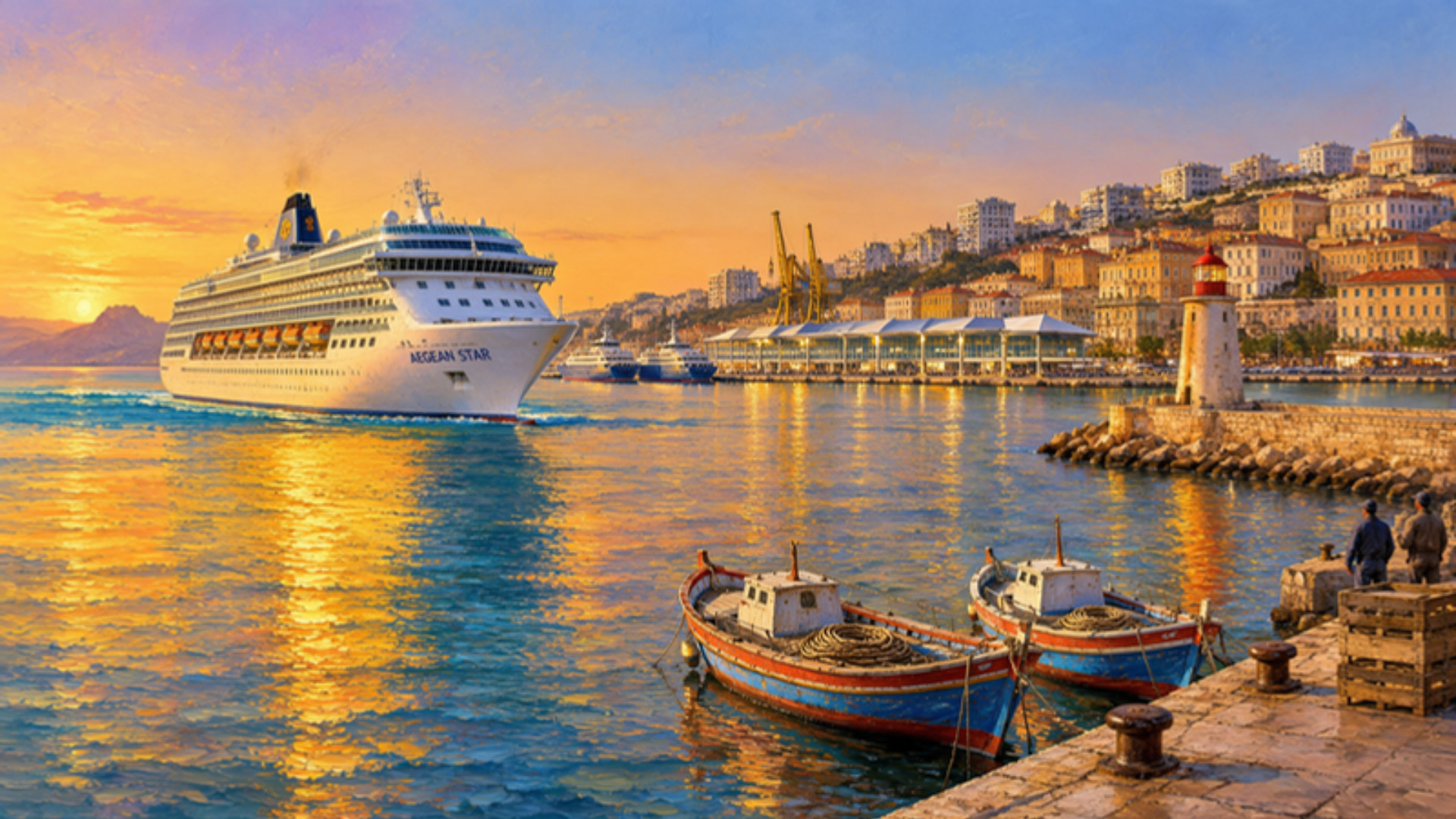
Sailing Into the Port of Athens
Picture this. It is early morning, and the sea is calm and silver. Your ship slowly turns toward land, and there it is: Piraeus Greece (Πειραιάς, pee-reh-AHS), the port of Athens.
You are not alone. All around you, giant ships are pulling into the harbor. Some come from Royal Caribbean. Some come from Celebrity, Norwegian, Princess, and Holland America. There is even a Greek cruise line, Celestyal, that calls Piraeus home. Every summer, ships bring travelers here from all over the world.
Most people hurry off the ship and head straight for Athens. I understand why. But if you rush past Piraeus, you will miss some of the best kept secrets in all of Greece.
So let us slow down and take a walk together.
A Port With a Long Memory
About 2,500 years ago, an Athenian leader named Themistocles had a big idea. He turned Piraeus into the home of the Athenian navy.
Then Athens did something amazing. It built the Long Walls, two walls about 4 miles long, running all the way from the city down to the sea. Why? So that even in a war, food and supplies could still reach Athens by ship.
Think about that the next time you take the train from Piraeus to Athens. Today, the green metro line makes that same trip in about 25 minutes.
The Lion With a Secret
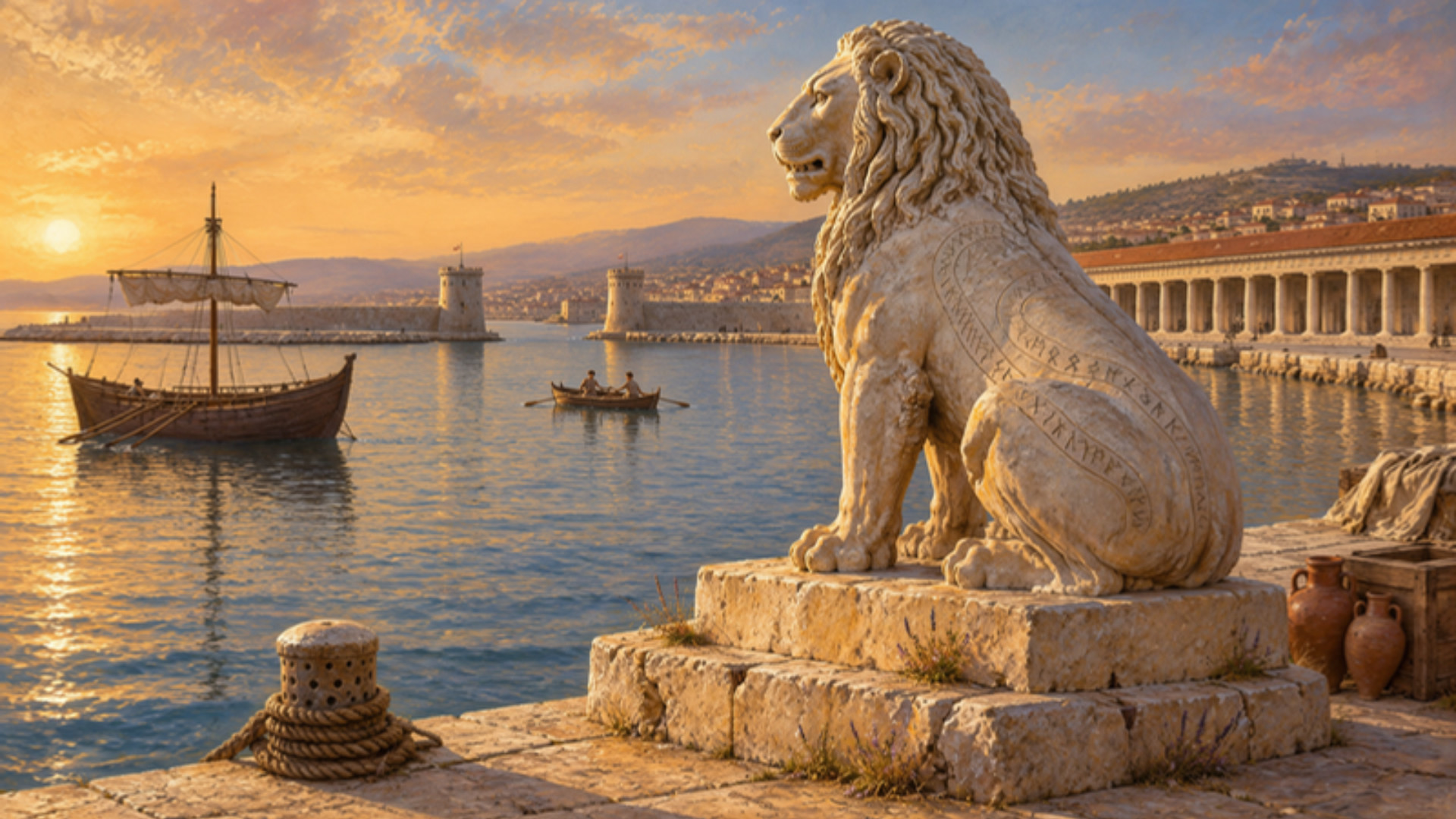
For hundreds of years, a huge marble lion sat at the entrance of the harbor. It was carved around 360 BC. Sailors saw it as they came and went. It became so famous that the harbor was once called Porto Leone, the Port of the Lion.
But here is the part that surprised me. In the 1000s AD, travelers from faraway Sweden passed through. They were Vikings, and some of them may have served as guards for the emperor. And they did what travelers still do today. They left their mark.
They carved runes (old Viking letters) into the lion’s sides. Imagine that! Viking graffiti on a Greek lion.
The lion’s story did not end there. In 1687, a Venetian commander named Francesco Morosini took the lion home with him as a prize of war. It still stands in Venice, Italy today, outside the old shipyard called the Arsenal.
Still, Piraeus did not forget its lion. You can see a copy of it in the Archaeological Museum of Piraeus.
Treasure Under the Street
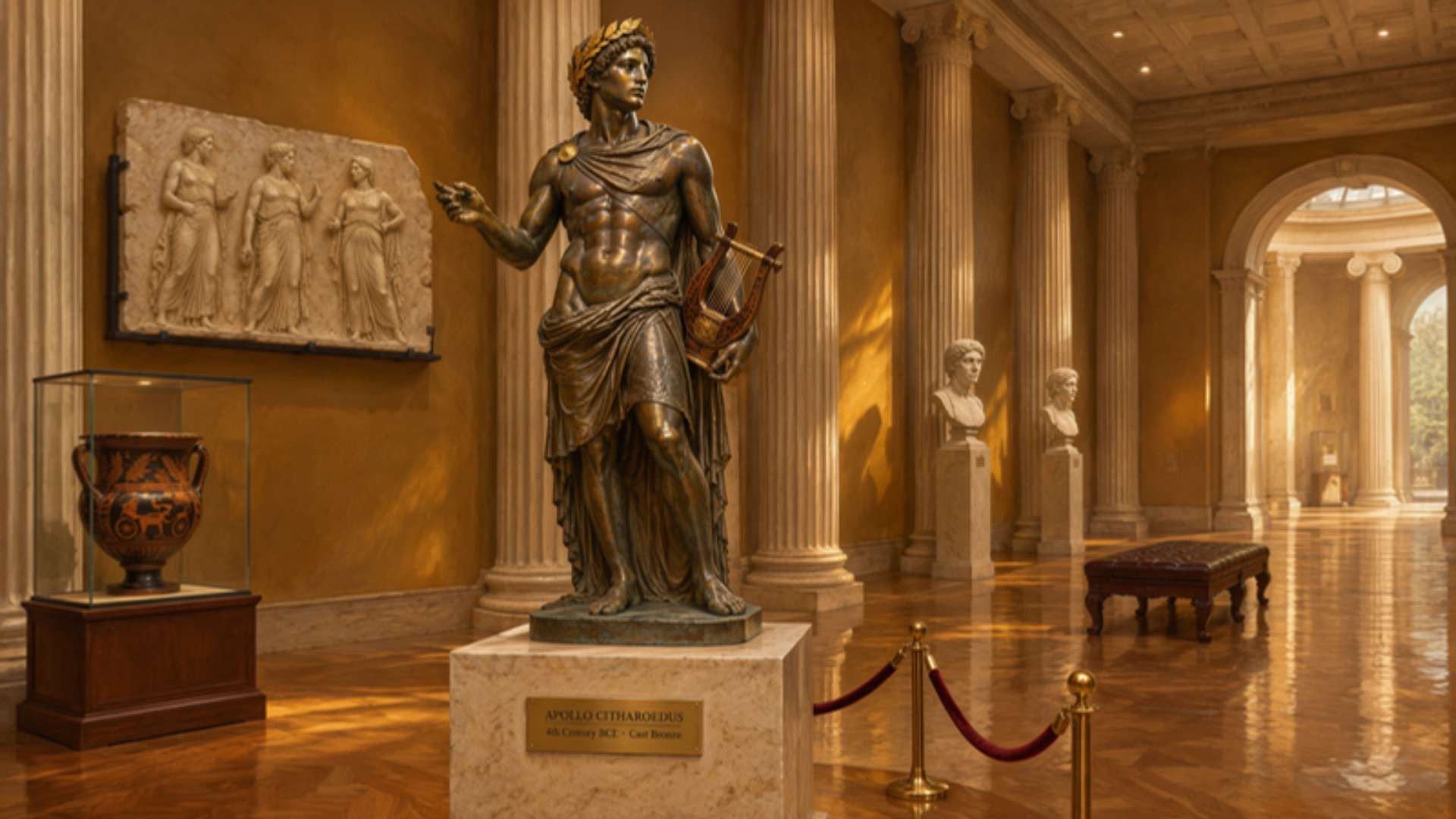
In July 1959, workers were digging in Piraeus when their tools hit something hard. It was not a rock. It was bronze.
Buried together under the ground were bronze statues of Apollo, Athena, and Artemis, three of the most famous gods and goddesses of ancient Greece.
Why is that such a big deal? Most ancient bronze statues were melted down long ago to make coins and weapons. Finding even one is rare. So finding several together is a treasure.
Experts still talk about how old the Apollo really is. Some say it is very old. Others say it was made later, in the old style. Either way, you can stand right in front of these statues today at the Archaeological Museum of Piraeus.
Where Warships Slept
Here is a gem most visitors never hear about.
Long ago, Athens kept its warships, called triremes (long wooden ships with three rows of oars), in long garages called ship sheds. Many of them stood at Zea Harbor in Piraeus.
Today, three of those ancient ship sheds are still there, inside the basement of an apartment building. More of them lie under the sea, waiting quietly beneath the water.
Just think. People in Piraeus park their cars and carry home their groceries right above the place where the Athenian navy once rested its ships.
Sunset on Kastella Hill
When you are ready for a view, climb Kastella Hill. It rises about 300 feet above the harbor. From the top, you can see Athens, the sea, and the islands floating on the water.
At the very top sits the little church of Profitis Ilias. Nearby is the Veakio Theatre, an open air theater where people gather for concerts on summer nights.
Dinner at the Little Harbor
At the foot of Kastella Hill is Mikrolimano. The name means “little harbor,” and it is just that. Here, small fishing boats rock gently on the water, and seafood tavernas line the shore.
So pull up a chair, watch the boats, and order the catch of the day. This is Greece at its best.
A Few More Gems
Imagine that! An old post office building is now a beautiful art museum called the Municipal Gallery.
And if you love ships, visit the Hellenic Maritime Museum. It is the largest navy museum in Greece, with old maps, flags, and even part of a real submarine sitting outside.
Greek Words to Take With You
| Greek | Say it like this | Meaning |
|---|---|---|
| λιμάνι | lee-MA-nee | port, harbor |
| πλοίο | PLEE-o | ship |
| λιοντάρι | lee-on-DA-ree | lion |
| θάλασσα | THA-la-sa | sea |
Try saying them out loud as your ship pulls into the λιμάνι.
Order Dinner at Mikrolimano With Confidence
Wouldn’t it be wonderful to sit down at a taverna in Mikrolimano and order your dinner in Greek? To say “Τον λογαριασμό, παρακαλώ!” (The bill, please!) and watch your server smile?
That is exactly why I created the SpeakGreek app. It teaches practical Greek you will use every day, in short lessons, with the voice of a native Greek speaker. The SpeakGreek app opens on January 15, 2027, and I cannot wait to share it with you.
What We Found in Piraeus Greece
Piraeus is so much more than a place to catch a ship. It is a lion with Viking writing on its sides. It is bronze gods hiding under a street. It is ancient warship garages under an apartment building, and a sunset view from Kastella Hill.
So the next time your ship sails into the port of Athens, take a little time. Piraeus has stories waiting for you.
If you’re interested in learning more, here’s where I found these stories:
Leave a Reply